

Most businesses misread accounting software pricing because the monthly fee looks small and the real cost sits elsewhere. If you are comparing accounting software pricing, the only useful question is not “what is the subscription?” but “what does this system cost to run properly, and what control does it give your business?”
What Accounting Software Pricing Actually Includes
Accounting software is not a simple utility bill. You are paying for bookkeeping capability, yes, but also for workflow automation, reporting depth, VAT handling, permissions, audit trail, integrations, support, resilience, and headroom for growth. That is why two tools with similar monthly fees often create completely different finance outcomes.
This matters even more now because the market keeps expanding and vendors keep packaging more functionality into tiers, modules, and add-ons. With the accounting software market already at $20.03 billion in 2025, pricing is increasingly shaped by automation, compliance, and data visibility rather than basic ledger features alone.
Subscription Fees vs Total Cost of Ownership
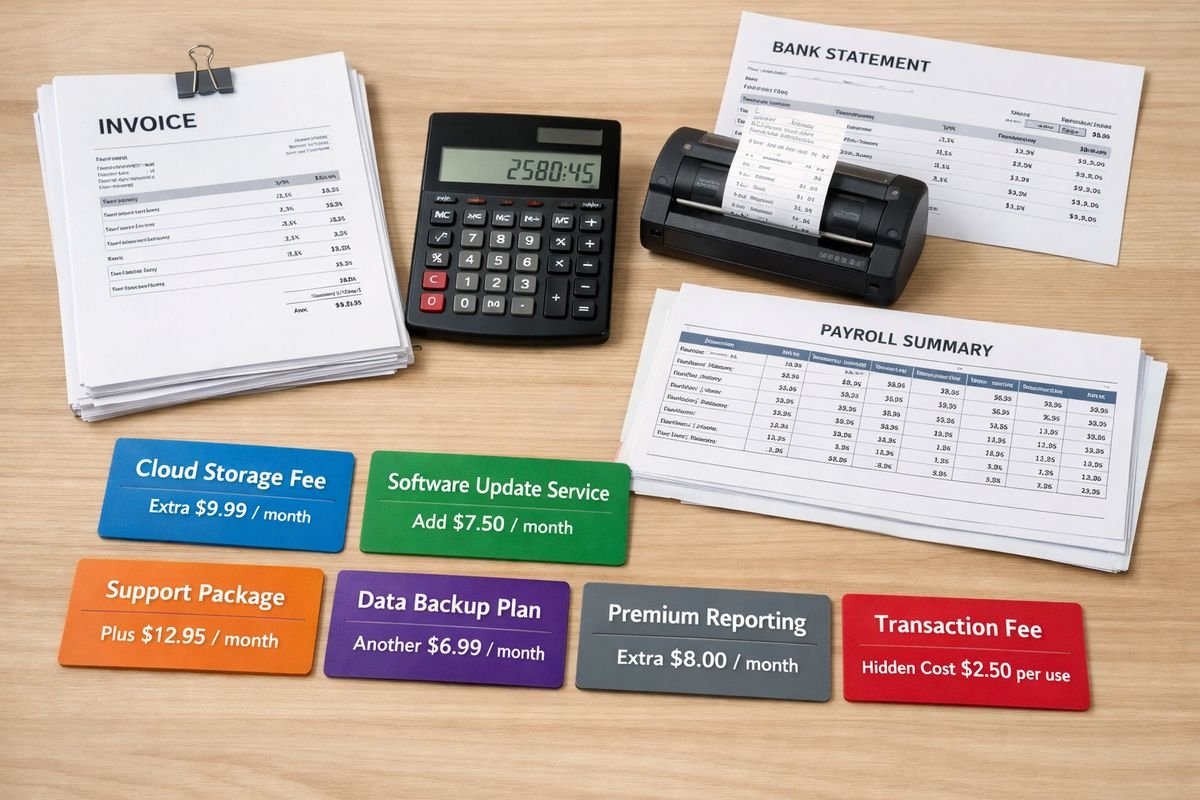
The headline subscription is only the entry ticket. Your full cost includes user licences, payroll, expense apps, stock control, approvals, payment tools, reporting modules, onboarding, migration, and support. Once those are added, a low-cost package often stops looking low-cost.
For an SME, total cost of ownership is the right lens because finance software affects labour, reporting accuracy, month-end speed, and decision quality. A cheap platform that forces manual exports, spreadsheet workarounds, and duplicate data entry creates hidden operational cost every single month. A more expensive system that cuts five hours a week from reconciliation and speeds invoicing has already changed the economics.
Why Similar Price Points Deliver Very Different Value
Entry prices tell you almost nothing about business fit. One platform at EUR25 per month may give you basic invoicing and bank feeds. Another at EUR29 may include approval workflows, multi-currency, stronger reporting, and cleaner audit history. Those are not minor differences. Those are control differences.
The real divide shows up in daily use. Can you see margin by department? Can you spot overdue receivables early? Can you close month-end faster? Can your finance team trust the numbers without rebuilding reports offline? If the answer is no, lower pricing is not value. It is delay.
The Main Pricing Drivers Behind Accounting Software
Software cost rises when your business asks the system to do more than record transactions. That is exactly what growing businesses need. Pricing follows complexity because complexity demands structure, automation, and stronger controls.
Features, Automation, and Financial Control
You pay more for software that removes manual work and gives you live financial control. Bank feeds, automated reconciliation, recurring invoices, receipt capture, approval workflows, forecasting tools, and dashboard reporting all push pricing upward because they save time and tighten process discipline.
That premium is justified when it replaces manual effort with reliable workflow. If your team still keys in supplier invoices by hand, chases approvals by email, and waits for month-end to identify issues, your finance system is underpowered. The payoff from automation is not abstract. It shows up in faster billing, fewer posting errors, cleaner records, and sharper visibility into cash and performance. That is the same logic behind building connected finance workflows instead of relying on disconnected admin tasks.
Users, Entities, and Operational Complexity
Pricing also scales with how many people use the system and how tightly access needs to be controlled. A founder logging basic income and expenses has one requirement. A business with finance staff, operations managers, external accountants, and directors has another.
More users usually mean more cost, but the bigger factor is role complexity. You need layered permissions, approval stages, department views, entity separation, intercompany treatment, and consolidated reporting. Add multiple locations, multiple VAT schemes, or multiple currencies, and the price rises again because the system is carrying real operational structure, not just transactions.
Integrations, Payroll, and Add-On Modules
This is where buyers regularly underbudget. Core accounting rarely stays standalone for long. Payroll, inventory, project costing, CRM links, payment platforms, tax tools, document capture, and BI reporting all bring extra spend.
The catch is that connected operations often deliver the highest return. If accounting talks directly to sales, purchasing, payroll, and stock, your data stops fragmenting. Finance becomes faster and more accurate because information flows through the business instead of being stitched together afterwards. That is why better cash flow visibility usually depends on connected systems, not just a ledger with invoices.
Pricing Tiers: What You Get at Each Level
The market breaks into clear tiers. Once you understand what each tier is built to solve, pricing becomes easier to judge.
Entry-Level Tools for Sole Traders and Very Small Businesses
At the bottom end, pricing often starts below £20 per user per month, and some vendors offer free plans. Research on small business adoption notes that pricing for many entry tools begins under $20, which explains why cost is not the only barrier for microbusinesses.
These systems suit simple needs: invoicing, expense logging, basic bank reconciliation, and standard reports. The limitations appear quickly. User controls are light, reporting is shallow, approval structure is weak, and scalability is poor. If your business has one owner and low transaction volume, that is acceptable. If you need managerial reporting, departmental visibility, or tighter controls, it is not.
Growing SME Platforms for Control, Automation, and Better Reporting
This is the real mid-market sweet spot. Pricing sits higher because the software starts behaving like an operating system for finance rather than a digital cashbook. You get stronger VAT support, better bank automation, multi-user access, custom reporting, approval paths, and broader integration options.
This tier fits established SMEs that need clarity on receivables, payables, margins, and cash timing. It also supports businesses that are done with reactive bookkeeping and want live management information. If that is your goal, moving beyond month-end reporting changes the buying criteria completely. You stop buying software to record history and start buying software to run the business.
Advanced Systems for Multi-Entity, Compliance-Heavy, or Fast-Growth Businesses
At the top end, pricing rises sharply because the system now supports governance as much as bookkeeping. You are paying for consolidated entities, deeper controls, stronger reporting models, forecasting, audit support, data governance, and advanced automation.
This tier serves businesses with more risk, more stakeholders, and less tolerance for poor data. If you are operating across locations, jurisdictions, or business units, the software has to support discipline at scale. The cost is higher because failure is more expensive.
The Hidden Costs Buyers Miss
Most pricing mistakes happen outside the subscription table. Buyers compare packages line by line, then discover the real spend after signing.
Implementation, Migration, and Training
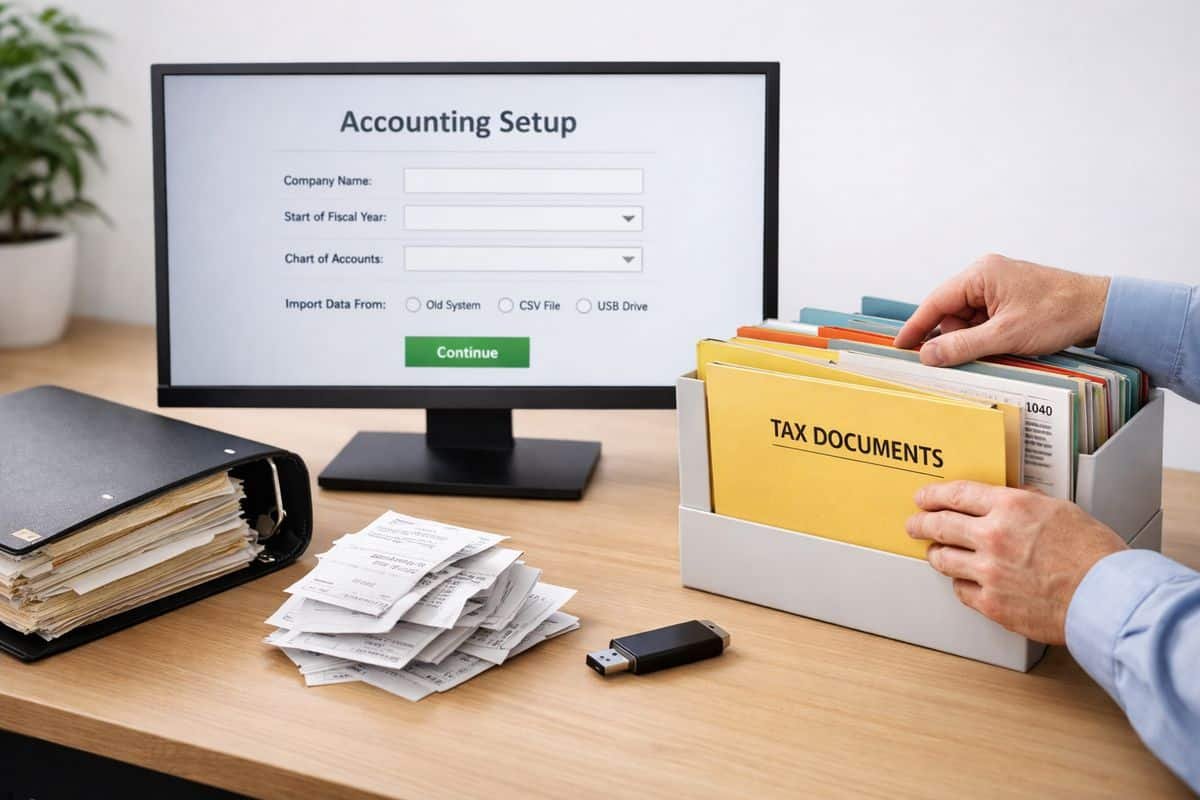
Implementation is not an admin task. It is where chart of accounts design, opening balances, historic data, tax setup, approval logic, and reporting structure get defined. If that work is rushed, your reporting stays unreliable and your team creates workarounds from day one.
Migration also costs more than expected when old records are inconsistent or spread across spreadsheets and legacy tools. Training is another missed line item. Advanced features only create value if your team uses them properly. That is why software with stronger automation often needs better onboarding, not less.
Support, Customisation, and Ongoing Maintenance
Support levels vary dramatically. Basic email support may be included, but fast-response help, account management, workflow reviews, and tailored setup usually sit behind premium plans or external advisory fees.
Customisation has the same pattern. The moment your process differs from default settings, someone has to configure forms, permissions, reports, or integrations. Then that setup needs maintaining as your business changes. Strong software is never fully “set and forget”. It needs periodic review to stay aligned with your operation and KPIs, especially if you are using live finance dashboards for decision-making.
Compliance, Security, and Future-Proofing
You are also paying for staying current. Tax changes, security updates, audit trail integrity, user access controls, backup resilience, and regulatory readiness all carry cost inside the platform.
Future-proofing matters too. Finance software is moving toward AI-assisted workflow, predictive analysis, and more connected data models. By 2028, 33% of enterprise applications are expected to include agentic AI. If your platform is closed, rigid, or weak on integrations, you risk paying again later through re-platforming, retraining, and process disruption.
How to Compare Accounting Software on Value, Not Sticker Price
Good buying decisions come from measuring business return, not just licence fees. Your software should improve control, reduce friction, and support growth.
Calculate the ROI in Time Saved and Errors Removed
Start with labour and delay. How many hours go into manual entry, invoice chasing, reconciliation, approval follow-up, and report rebuilding? How long does month-end take? How often does finance need to correct coding mistakes or hunt down missing documents?
Translate that into cost. If automation reduces admin time, improves billing speed, and cuts avoidable errors, the return becomes measurable very quickly. Better software also strengthens reporting discipline, which means fewer surprises and better operational decisions.
Match the System to Your Stage of Growth
Buy for the next 12 to 36 months, not just today’s volume. A business with stable transactions and simple reporting does not need an advanced finance stack. A business adding entities, locations, managers, and reporting layers does.
Judge fit against transaction volume, approval complexity, cash flow pressure, team size, compliance exposure, and management reporting demands. The right system should support where your business is going, not force a replacement as soon as growth arrives. That is the same principle Prodyssey Solutions applies when connecting finance, systems, and operations into a live control environment rather than a basic compliance setup.
Red Flags That Signal a False Economy
The clearest red flag is buying on entry price alone. Another is assuming integrations, support, migration, and training are minor extras. They are not. They are part of ownership cost.
A false economy also shows up when software caps reporting too early, lacks approval structure, or forces your team back into spreadsheets. Research shows 51% of small businesses still avoid finance software altogether, often because manual methods feel familiar. Familiarity is not efficiency. It is usually hidden delay, higher error risk, and weaker control.
Accounting software pricing only makes sense when you measure what the system gives back: time, visibility, accuracy, compliance, and room to grow. Ignore the sticker price, test the operating value, and choose the platform that gives your business cleaner data and faster decisions.